

Made in China: The Complex World of Asian Antiquities
March 24, 2026
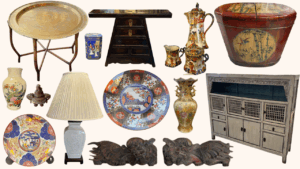
Why are Asian antiques so popular?
Some of our most popular sellers, Asian antiques are coveted for their beauty, elegance, and craftsmanship. Capturing the attention of collectors, designers, and art enthusiasts globally for centuries. Asian antiques offer elegance, craftsmanship, and cultural & historical significance. The art styles of different dynasties not only offer a piece of history but the elaborate designs fit into a variety of interior styles, making it an art piece that’s easy to style in any home. Whether it’s authentic or a reproduction, these pieces are coveted as home decor pieces worldwide.
The rarity of true antiques not only adds significant value to the piece, but can make it a wise investment, with values appreciating over time. Authentic Asian antiques often fetch high bids at auctions for this reason, in turn increasing the demand and appreciation.
Here are some guides to Asian antiques and their history:
- The Global Appeal of Chinese Antique Furniture – Why it’s coveted world-wide
- House and Garden: All About East Asian Lacquer and Japanned Furniture
To add to the confusion, the term “antique” covers items that are at least 100 years old, with the Chinese civilization dating back more than 8,000 years, “antique” doesn’t really cut it. The practice of reproduction goes back just as far, so today even these antique reproductions are valuable in many ways. Many of our clients come to us with their Asian “antiques”, unfortunately, many of these pieces are mass-produced reproductions that were sold as the authentic piece from some very long ago Chinese Dynasty. Some replicas so well-done they can even fool professionals. The world of Asian antiques is complex and dynamic and with so many fakes now flooding the market, the resale value of these items have dropped drastically. But what does that mean for collectors? How did this all get started? Let’s dive deep into some of the frequently asked questions.
Please note that we will be using the term “fake” and “reproduction” interchangeably, although the definition of these terms have slight differences.
Why are there so many fakes?
There’s a finite number of antiques and with more fakes being made each year, the proportion of the genuine begins to shrink. So to put it simply – supply & demand. With the high value set on authentic antiques, some businesses want a piece of the action and to do this they sell or manufacture fake antique pieces of ceramic, jade, bronze, and other materials. After that the cycle continues, the demand grows and more fakes need to be made to meet it. With so many fakes now in the market, authenticating requires a lengthy process, sufficient resources, and the education to determine real from fake, making this option often inaccessible to many auction houses, resellers, and other shops.
Furthermore, although there is a large global demand for Chinese antiques, there is an even larger demand within China. As auctioneers can sell their antiques for a higher price within China, there is little motivation to sell elsewhere in the world. This in turn fuels the demand for the fake antiques that enter the global market.
Interestingly enough, the art of making and selling reproductions is a centuries old practice in China and potentially other Asian countries as well. When learning the art form from a master, you practice by copying the piece. Many reproductions are meant to deceive as well, with notes about how to age different materials written centuries ago. These antique reproductions can be valuable however, especially if they’re high quality and kept in good condition and of a style, colour, or material that people want.
Learn more about the practice of Asian antique reproductions and the rising issue:
- The Seattle Times: Fake Antiques are a Tradition in China
- “The Escalating Problem of Faking” by Michael Backman
Are the reproductions worth anything?
In truth, the fakes and reproductions have little long-term investment value, but they can have great decorative or even sentimental value. For resale, prices can vary greatly depending on the size, quality, and namely age – as vintage or antique reproductions of an original antique piece can still carry a decent value beyond the decorative. Vintage reproductions can also have significant value when there is a demand for that style, such as Chinoiserie furniture or Japanese woodblock prints.
Due to the ratio of fake antiques to genuine, checking the legitimacy of Asian antiques can often be more trouble than it’s worth with many businesses, resellers, or other shops not having the resources necessary to do so.
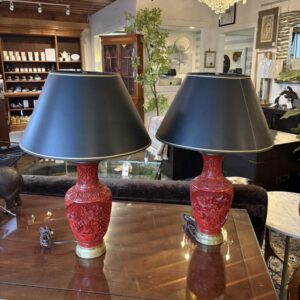
These vintage Asian cinnabar table lamps are a rare find and are estimated to be around 60-70 years old. Even though they aren’t classified as ‘antique’, they’re still beautiful and carry historic charm that can add character to any space.
How to tell the fake from the real?
This can be exceptionally tough, at times even art curators and professionals disagree on the legitimacy and origin of pieces.
Some tips are to look over the construction of the piece and check for evidence of modern machine-made techniques rather than traditional and handmade (often uneven and imperfect). Glossy paint or uniform patina can also be a red flag – as well as techniques or designs not used during the age the piece is claiming to be from.
According to Irv Graham, fakes can be described as one of three types:
- Random: The reproduction is randomly made and combines different styles and periods.
- Mock: The item is reproduced from a photo of an authentic antique.
- Clone: The item is made using the correct tools and techniques, therefore it looks very close to the real thing.
Check out his full blog: Fake Chinese Porcelain Starter Guide
If you’re interested in purchasing Asian antiques, here are some guides that might be useful. Always use your own discretion when purchasing antiques that are claiming to be “authentic”:
- House and Garden: Lacquered Japanese Furniture Guide
- The Brutal Guide to Buying Chinese Antiques on eBay
- A Quick Guide to Chinese Antiques
- Ten Rules on “How to Deal with Fakes”
- Fake Chinese Porcelain Starter Guide
- Video: How to Spot Fake Chinese Antique Furniture Like a Pro
Should I buy Asian antiques despite its reputation for frauds and fakes? Should I buy something I know is fake?
Buying Asian antiques can be a rewarding investment or passion if you know how to avoid the fakes. However even with experience and education, it can still be quite a gamble, so ultimately it’s up to you. If you’re interested in learning more about Asian antiques, then accidentally buying a fake and making those mistakes will just be part of the process. From this, you can learn for next time what to look for, what questions to ask, and who are the reputable sellers. With that being said, many reproductions can still be close to or over 100 years old but were not made during, for example, the Qing or Han dynasties. These items still have value and are considered vintage or antique reproductions of antique pieces from those periods and other Ancient Chinese dynasties.
If you’re interested in the item solely for decorative value then the authenticity or age doesn’t matter as much, so long as you are buying to enhance your home or offices decor.
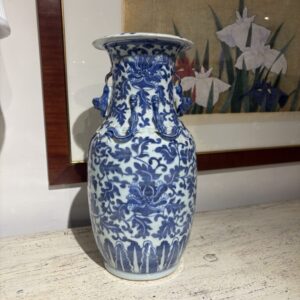
Pictured above is an antique Qing Dynasty vase (1644-1911) and was most likely created for export to Western Markets, as were many of the blue and white ceramics during that time. Although it may have been mass-produced, it remains a beautiful and rare find that can easily fit in anyone’s home decor style.
We hope that you’ve gained some more insight into the world of Asian antiques and that it may prove useful while navigating auctions, online sellers, or anywhere you shop for antiques. If you believe your Asian antique is a fake, don’t panic! As mentioned, even fakes can have value when they’re antique or vintage and still add great value to interior design.
If you’re looking to switch our some of your Asian antiques for something new, learn more about how to consign with Coast Consignment. If you’re interested in purchasing any of the items pictured in this article, browse our inventory online and find out the different ways to buy.
If there’s something else you’d like answered, please leave a comment below.
More resources:
- Can you spot a fake antique?
- Video: Getting Taken: The BIGGEST ART FRAUD Market on Earth
- Video: Chinese Porcelain FAKES: How collectors have lost millions of dollars
Featured Items:
- Vintage Asian Style Table Lamp
- Antique Asian Barrel with Lid
- Japanese Plate
- Asian Vase with Peacock
- Vintage Japanese Serving Plate
- Vintage Chinese Vase
- Vintage Imari Japanese Tea Service
- Vintage Painted Chinese Sideboard
- Vintage Chinese Brass Tray Table with Folding Base
- Antique Chinese Carved Redstone Inkwell
- Antique Chinese Hair Cutting Stool
- Pair of Antique Carved Foo Dogs
- Chinese Cloisonné Box